Valeo Training

Monday, July 2, 2007

Eat Pure. Live Pure. (and it's Yummy!!)


I'm sitting here eating a Pure Bar. Organic, Raw, Healthy and Delightful (just like the package says)! NO refined sugars, no trans fats, nothing artificial...! Created by Holland's own Veronica Bosgraaf, these health bars were originally made with kids in mind, as an alternative to sugary snacks. They've become so popular, they are now sold around the world and boast some of the best reviews. At 190 calories, 8g fat (from essential "good-for-you" Omega-3 fatty acids), 26g Carbohydrates - 4g of which come from filling-Fiber and 19g from natural fruit sugars and 5g Protein, these bars have it all - and are the perfect between-meal snack to keep you going.

It's been a long time since I've had something like this that's tasted so good...you should try them! They are found in our local grocery stores (next to most sport bars), in health-food stores and in local coffee shops and cafes (JPs, etc). My favorite flavor so far is Apple Cinnamon...what's yours?


Q. How do I get the most out of my Strength Training?

A. Train smarter, not harder. Ask yourself, whether for sport or general fitness, is my training...

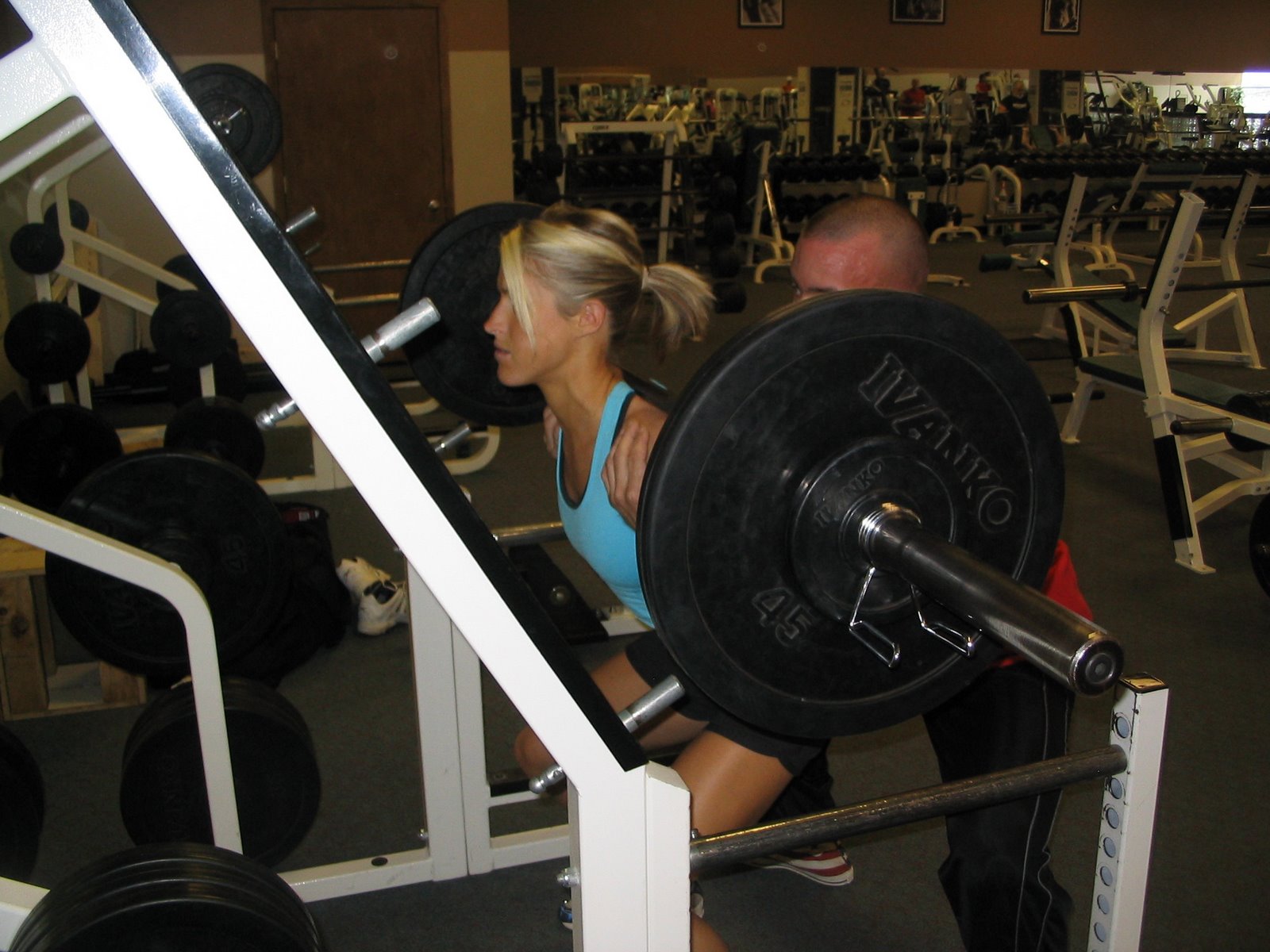
i. Ground-based (preferably standing) and closed-chain – feet or hands are connected to ground (return of power).
ii. Multi-directional (3-planes of motion) (sagittal: front/back, frontal or lateral: side/side, transverse: w/ rotation or around). We all must be able to move quickly and safely in any direction – and be strong muscularly on all sides of body (to reduce injury, aches and pains).
iii. Multi-joint – focus should be on whole-body movement-based strength training, not isolating a single-joint at a time. The only place for a single-joint lift (bicep curl, triceps extension, leg extension, leg curl, etc) is maybe in the Hypertrophy phase when the focus is simply to get bigger. The most functional and also time-efficient exercises are ones that will involve multiple joints at once, since this is how we move in everyday life.
iv. Applicable to the environment we live in – influenced by gravity, inertia, momentum and impulse. You must replicate the environment during training.
v. Incoportating Balance & Stability: Train brain and nerves to ‘talk to’ muscles to enhance proprioception à greater control of movement à greater execution of coordination and power. This is accomplished by training in an environment that is unstable (use 1-legged lifting, stability balls, balance exercises, etc) and multi-directional – improves coordination and reduces injuries (ACL, ankle, knee, etc). Unstable joints (especially shoulders, hips, knees, ankles) will ‘leak’ power that could have potentially been executed during movement.
vi. Emphasizing activation of core in all movement..
vii. Focusing on hip extensor muscles (primarily glutes, hamstrings, paraspinals/low back). The more they can load (think extend, ‘stretch’, eccentric), the more power they can unload (fire, concentric mvmnt) due to stretch reflex. Oftentimes, weakness in these muscles are main causes of pain (especially to the back).
viii. Generating power on a single leg through 1-L exercises and reaches.
ix. Emphasizing deceleration – ex) quads decelerate knee flexion in sudden stops/changes of direction (think squatting or lunging), hamstrings decelerate hip flexion (think squat and lunge again, RDLs or reaches), abdominals decelerate trunk extension (think how trunk loads during initial throwing, running or kicking action).

If you want to move, look and feel better, these Functional Training components should be the basis of your strength training program.

Monday, June 25, 2007

Q. I'm exercising now...why isn't the weight coming off?!

A. There are many answers to this question, depending on your individual make-up. The first thing is to distinguish between fat weight and overall weight. We want to reduce fat weight….so don’t become too stuck on that number on the scale! More to come on this in another Post, but in the meantime…remember:

YOU ARE NOT THE VICTIM OF YOUR METABOLISM…YOU ARE ITS CREATOR! Though it may seem like it, you did not become 10, 20 or however-many pounds heavier overnight. Yes, genetics plays a role, but poor nutrition, exercise, emotional and stress habits, however big or small, gradually add up and negatively alter the rate at which our body burns calories. Good news is…the reverse is also true -
you can create new habits that can positively alter your calorie-burning rate!

Losing weight, in theory, comes down to using more calories (by increasing your metabolism) than you are taking in. Numerically, 3,500 calories equals 1 lb of fat…so, if I burned 3,500 calories over this next week, I should be 1 lb lighter. This caloric deficit can be achieved through reducing the amount of food I intake, increasing the amount of movement in my day so my body requires calories to be burned, or, ideally – both. Remember, whatever you take in that your body doesn’t need, you will store as fat.


Here are my Top Ten Tips (in no particular order) for eating consciously and exercising adequately to give that metabolism a boost.

NUTRITION (aka fueling your body)


1. EAT BREAKFAST and keep sugars (carbohydrates) low (watch cereal portions, instead of 2 pieces of toast, just have 1, etc) – and instead, include a lean protein source (bacon doesn’t count as lean!). Think egg whites, lean meats, low-fat cottage cheese, etc.
2. EAT EVERY 3-4 HOURS – not necessarily more calories throughout the day, just more frequency. Your metabolism is like a fire – you need to keep putting kindling on the fire, or it will die down. Never go long periods without eating.
3. THINK NUTRIENT DENSITY when choosing snacks or meals – which food will give me the most nutrients for the least number of calories?
4. HYDRATE! w/ water only.
5. FIBER = FEEL FULL. Eat foods with fiber – at least 3g/serving. Think fruits, veggies, whole grains.
6. JUST SAY NO TO SUGAR = LOOK AND FEEL SWEEEET (yup, pun intended) ;). You’ll feel (and look!!) better if you reduce or eliminate junk sugars (carbohydrates) – anything that doesn’t fall into the fruits, vegetables or whole grains (oats, beans, 100% whole grain products) category. Throw away and don’t keep buying the boxed and bagged goodies!
7. DON’T ASSOCIATE. Yes, eating and drinking is a feel-good thing and should be celebrated. But don’t give it more attention than it deserves. Associating munchies with TV watching, that glass of wine with relaxation, that sneaky handful of candy on the way to your desk, or that scone with your morning cup of java are ways those calories can creep in unconsciously.
8. TIMING – if food is fuel, eat when you are the most active (probably morning or mid-day) and least when you are least active. This means avoiding stuffing ourselves late at night when all we will be doing is snoozing – a time when your body turns its metabolism down!
9. HAVE 1 CHEAT DAY A WEEK. Or, in other words...have 6 non-cheat days. Being good to yourself means eating fresh and clean (consciously, nutritiously, adequately) and also allowing yourself to not be ruled by it. Who knows, after the cheat day, you may realize how much better you feel afterwards when you do eat more healthfully!
10. REPLENISH. Consume a moderate amount of lean Protein (10-20g for tissue repair) and Carbohydrates (20-30g depending on activity for fuel replacement) immediately after exercise. This is when your body is most likely to USE the nutrients, not store them as fat (see Post from 6/20). Plus, your cells will be refilled and, therefore, be ready for exercise for the next day.


EXERCISE (aka requiring your body to need fuel)


1. LIMIT YOUR SITTING TIME. Continuously being sedentary is the #1 way to decrease your metabolism. Seeing me to exercise, even 3 hrs/week is wonderful and commendable, but if the other 165 hours of your week are spent on your toosh, your metabolism won’t be making many significant changes. This is hard for all of us! If you must sit down for the majority of your day, try to get up and move every hour or two! Do things standing up as much as possible. The heart rate needs to work harder, and therefore, more calories are being burned to keep up with the increased demand from the body.
2. IT ALL ADDS UP. Look for ways to sneak activity into your day - walk to the video store, ride your bike to go pick up that prescription, take the long way around the shop, deliberately walk the stairs in your house 'just because', play outside with your kids, do a few push-ups during commercial breaks...the ways are endless!
3. BE OK WITH BEING UNCOMFORTABLE during exercise. Overloading (safely) our body is what makes it adapt and forces it to change.
4. SPICE IT UP – don’t let your body get bored! Plateaus happen when what we’re doing becomes the body’s norm. Add variety to your routine and force those lungs and muscles (including the heart muscle!) to have to wake up again.
5. THERE IS NO SUCH THING AS A FAT BURNING ZONE – burning calories comes down to how much work you’re getting done. Ideally, we’d all love to do more work in less time – If you have no health restrictions, don’t be afraid to crank up the intensity. You will burn more calories working at 70-80% of your maximum effort for 30 minutes than you will working at 40-50% of your maximum effort for 30 minutes. Weight loss is dependent on total calories burned, regardless of what the body is burning for fuel (carbohydrates vs. fat, etc).
6. AFTERBURN! Burning calories doesn’t stop once the exercise session is over! Your body becomes a calorie-burning machine long after higher-intensity workouts. Look for ways to rev up the intensity during your workout (circuit-style weight-lifting, reduce rest periods, add more speed, increase inclines) – this, in turn, will spike that metabolism and keep it elevated throughout the day.
7. CONSISTENCY IS KEY.
ACSM recommendations are 30 minutes of moderate-intensity (you can talk, but not super-comfortably) cardiovascular exercise most days of the week for improved health. For those looking for weight loss, this should be increased to 40-60 minutes of cardiovascular exercise most days of the week Whoa! Don’t worry…this can be added up throughout the day. Increasing your daily “unstructured” activity can do a lot for a person and does, in fact, count as exercise…as long as that heart rate is elevated and major muscles are moving. Strength Training recommendations are 2-3 days per week.
8.
SPEAKING OF STRENGTH TRAINING…This should be tops in your pursuit of a lean physique. Increasing muscle mass plays a HUGE HUGE HUGE factor in losing fat weight and achieving a shapely physique! Muscle tissue burns more calories, even at rest – lifting weights (heavy enough that the 10th repetition or so is difficult!) is a sure way to get that metabolism up and running!
9. CATCH SOME ZZZZs. – simply said, your body, including your metabolism, will not work properly unless you’re adequately rested.
10. LOVE YOURSELF and do the best with what you’ve got! Finding joy in the small things and knowing life is so much more than any number on the scale will keep those spirits up and brain chemicals working right. Hating your body does absolutely nothing for increasing your metabolism.

Wednesday, June 20, 2007

Q.) Is it important to have a Protein Shake immediately after weight training?

A.) Ah, a gym lover’s most talked-about nutrient – Protein! A refresher on the PURPOSE of protein – to build and repair tissue. Your body’s tissues are constantly in need of repair – your hair, skin, nails, muscles…all require building blocks called amino acids that make up a protein. During exercise – strength training in particular - your muscles are overloaded, causing microtears in the muscle fibers (that’d be the soreness you feel the next day). With adequate rest and proper nutrition – including protein intake – these fibers can build back up stronger and larger in diameter. Studies have shown that you have a 2-hr window where your cells (including muscles cells) take up nutrients the best…and the sooner, the better.

This replenishment can come, ideally, in the form of a regular meal or real-food snack that includes lean protein. If you are not able to eat real-food right away or cannot stomach solid foods right after a workout, consuming a protein shake is recommended to help the healing and rebuilding process. There is no magic number for how much, but aim for at least 10 g of protein. While every person is different depending on mode of activity, the average person should aim for .8g/kg body weight per day (divide your weight in lbs by 2.2 to get kg). Those looking to bodybuild should aim for at least 1.5g/kg bodyweight per day.

While protein is an important part of muscle development, most of our daily food intake supplies us with adequate amounts of protein, so no need to go too overboard. If weight control is an issue, watch total calories and remember that if protein has done its job and repaired what is needed and we continue to ingest more, we will just be sending it to be converted to fat. And, as my wonderful client Lee would shout… TNG! (that’s never good)…

Friday, June 15, 2007

Race of Their Lives!

On Saturday morning, June 9th, I got be part of one of the coolest things ever! I participated in the “Race of Their Lives” at the Lake Macatawa Triathlon. About 7 of us were paired up with a special-needs child from the Ottawa Area Center to compete in a swim (.5 mile), bike (22.8 miles) and run (4.8 miles). We got together three weeks ago to meet our kids and practice at Dunton Park before the big race day. I knew immediately when I saw little Kamrie that she was going to be my buddy!

We arrived early morning race day to very chilly air temps and very warm, post-e.coli infested waters (ewww…). The day turned out to be gorgeous, though, and the “race” was an absolute blast. Kamrie got to ride in an inflatable kayak behind me on the swim, in a trailor behind my bike and then I pushed her in a jogging stroller on the run. Seeing her dance and giggle with uncontrollable excitement the whole morning was so much fun. Whenever we’d go downhill on the bike, she’d lean waaaaay forward, close her eyes, her little face peeking under her helmet and let the wind whip through her hair. I knew that for that moment, she got to experience the freedom and exhilaration of soaring…It was a sight and an experience that has truly moved me and one I’ll never forget….I'd love to share it with you! - turn up your speakers and enjoy this little photo video!

I have a blog.

I've met and have had chats with many of you and have been asked various health and fitness-related questions along the way. In an attempt to address them adequately and also allow everyone to be involved in the conversation, I'd decided to create a blog. It's like seeing me for 51 minutes of the day instead of 50! (contain your excitement, please).... :)

Check out any news webpage or skim any magazine cover in the grocery check-out lane and it won't take long to see that there's a lot of health and fitness info floating around. This is where I come in. This blog can be your one-stop shop for keeping up with any Valeo adventures, and getting the latest and greatest scoop from the strength and conditioning world - a time to ask questions, post comments and read my responses. Who knows, maybe you'll learn a thing or two...except why we press harder on the remote control when we know the batteries are getting weak or why glue doesn't stick to the inside of the bottle.

These are things I don't know.

For everything else....stay tuned!